
Featured Projects
Booking Brilliance: Client Calls That Convert

Booking Brilliance is an interactive eLearning experience designed to help travel advisors confidently lead client inquiry calls.
Through scenario-based learning, guided practice, and real-world simulations, learners develop the skills needed to uncover client needs, reduce uncertainty, and guide conversations toward clear, actionable next steps.
This course emphasizes structured communication, helping advisors shift from reactive responses to confident, strategic guidance that builds trust and improves booking outcomes.
-
Audience: New and developing travel advisors who need support in leading effective client inquiry calls, as well as professionals transitioning into client-facing advisory roles.
-
Targeted Skills: This project focuses on structuring client inquiry calls using a clear framework, asking strategic open-ended and layered questions, identifying decision-making cues and client priorities, managing client uncertainty, summarizing client needs accurately, and communicating confident next steps to guide conversations toward booking outcomes.
-
Tools Used: This course was developed using Articulate Rise for overall course design and Articulate Storyline for scenario-based interactions, with additional support from Synthesia for AI-generated mentor videos, Canva for visual design, Google Forms for reflection activities, Google Flow Labs for AI call video creation, and ChatGPT for content development and instructional support.
Bloodborne Pathogens-
Protecting yourself and your residents
An interactive eLearning course designed to modernize annual OSHA bloodborne pathogens training for caregivers, nurses, and rehab staff at a fictional senior care facility. The course covers all five OSHA learning objectives through scenario-based interactions — including a PPE selection challenge, a contamination hunt in a patient room, a handwashing technique walkthrough, and a branching exposure-response scenario — followed by a knowledge check and printable certificate.
Built entirely with Claude Design as part of The eLearning Designer's Academy May 2026 Design Challenge, this project reinterprets the April 2025 challenge brief through a vibe-coding workflow
-
Audience: Healthcare workers in assisted living, nursing, and rehab care
-
Targeted Skills: Identifying bloodborne pathogen transmission, selecting and using PPE, practicing proper hygiene, handling contaminated materials, and responding to exposure incidents
-
Tools Used: Claude Design, Netlify (hosting), browser TTS for narration, ChatGPT for photorealism images

More Projects


Design Your Day: Teen AI
Innovation Lab
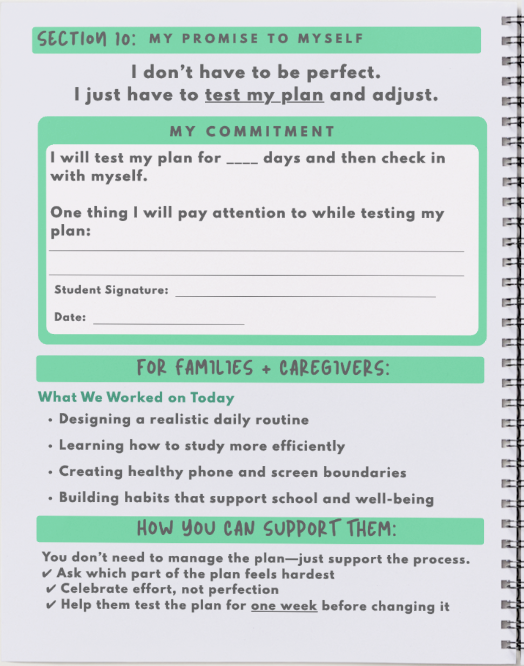
The Teen AI Innovation Lab was a hands-on learning experience designed to introduce high school students to artificial intelligence through design thinking and creativity. I designed the student workbook and learning materials that guided participants through brainstorming, problem-solving, and prototyping their own AI-powered ideas. The experience encouraged curiosity, collaboration, and real-world application of emerging technology.
-
Audience: High school students (ages 13-17) interested in developing stronger study habits, time-management strategies, and foundational AI literacy.
-
Targeted Skills: Design thinking, executive functioning, productivity planning, AI-supported study strategies, and digital wellness skills to improve focus and manage academic workloads.
-
Tools Used: Canva. Google Slides, Google Docs, AI tools for research and study support, and design thinking sprint activities.
The University of North Florida Professional & Lifelong Learning Center was preparing for the Skybound Teen AI Innovation Lab, a hands-on event designed to help students explore artificial intelligence, design thinking, and productivity strategies.
Facilitators had developed the program outline in a multi-tabbed Google document containing activity ideas, generative AI text, and planned deliverables. However, the content existed only as raw text and needed to be transformed into a clear, engaging resource for students to use during the event.
With one week before the program, I was brought on to translate the document into a structured, visually engaging student workbook that would guide learners through the experience and support the event’s learning goals.
Since completing the event, there have already been talks and plans in place to have repeat events.
*Full project is available for viewing if requested*



This project explores how AI video tools can support rapid content development while maintaining clarity, accessibility, and learner engagement.
Rapid Instructional Video Development with AI
This project explores how AI-generated video can be used to transform instructional content into engaging multimedia learning experiences. Using Synthesia, I converted written instructional material into a short training video while considering clarity, pacing, and visual engagement for learners.
-
Audience: Parents & Caregivers interested in supporting children’s STEM learning at home
-
Skills Grown: Understanding foundational STEM concepts. Recognizing the benefits of STEM education, Supporting hands-on learning at home, Encouraging curiosity and problem-solving in children
-
Tools Used: Synthesia, Canva, AI image generation
Solving a CRM Adoption Challenge Through Performance Consulting
This case study applies a performance consulting approach to support the rollout of a new CRM system, SalesFusion, for TechConnect’s sales team. Instead of assuming training as the default solution, the project analyzes the organization’s goals, constraints, and performance challenges to design a targeted learning strategy that supports successful system adoption.
The proposed solution includes concise workflow-based training, practice opportunities in a sandbox environment, and supporting job aids to help sales professionals integrate the CRM system into their daily workflows. The design emphasizes relevance, efficiency, and measurable performance outcomes.
The project includes both a written performance analysis and a video presentation outlining recommended interventions to support sustainable accessibility practices.
This project demonstrates how instructional designers can move beyond content creation to act as strategic partners in solving organizational performance challenges.

-
Audience: Sales professionals transitioning to a new CRM system within a fast-paced corporate environment.
-
Skills Grown: Effective CRM workflow use, Accurate data entry practices, Integrating new digital tools into daily workflows, Troubleshooting common CRM tasks
-
Tools Used: Applying Learning Theories to design, Performance consulting framework, Canva, Descript

Badge artwork hand-illustrated on iPad using Procreate.

Encouraging Healthy Work Habits Through Gamified Badging
The Balanced Breaker Badge was developed as part of a collaborative gamification project inspired by Spirit City: Lofi Sessions, a focus-driven productivity game. The project explores how gamified credentialing can encourage sustainable productivity by rewarding learners for incorporating intentional breaks into their workflow.
The badge system promotes balanced work habits by recognizing learners who practice restorative breaks during focus sessions, helping them maintain productivity while supporting mental wellness.
-
Audience: Students, professionals, and neurodivergent learners who seek structured productivity habits that support both focus and wellbeing.
-
Skills Grown: Self-regulation during focus sessions • sustainable productivity habits • intentional break strategies • emotional awareness during work
-
Tools Used: Procreate, Canva, Descript
Learning Strategy
The badge system encourages learners to integrate structured restorative breaks into their workflow. Participants complete focus sessions followed by intentional five-minute breaks such as stretching, journaling, or mindfulness activities. Learners document these breaks and share reflections with peers or instructors to reinforce accountability and reflection.
Once learners complete and verify three restorative breaks, they earn the Balanced Breaker badge, demonstrating their ability to maintain productive and sustainable work habits.
Why This Matters
This project highlights how gamification can support long-term learning habits, not just short-term task completion. By rewarding intentional rest, the badge promotes emotional intelligence, self-regulation, and sustainable productivity—skills that are valuable in both academic and professional environments.

The presentation highlights how emerging AI technologies can support the three core UDL principles: multiple means of representation, engagement, and expression.
Designing Inclusive Learning with AI and Universal Design for Learning
This presentation explores how artificial intelligence can support Universal Design for Learning (UDL) by improving accessibility, personalization, and engagement in training environments. The project analyzes common barriers learners face and proposes practical AI-supported solutions that organizations can implement to create more inclusive learning experiences.
-
Audience: Learning and development professionals in the travel industry
-
Skills Grown: Understanding accessibility barriers, Applying UDL principles, Evaluating ethical AI use, Designing inclusive learning environments
-
Tools Used: Canva, Descript, ChatGPT